
We all know community members who are struggling to make ends meet. They are our neighbors, our family, and maybe even yourself. They work hard to care for their family, but with rising costs, they still live paycheck to paycheck.
Make a gift today to provide critical resources to your neighbors like safe and affordable housing, nutritious food, and high quality education opportunities.
Please note: Our donation page requires two-factor authentication. You will receive an email with an authentication code to complete your donation. If you don't see it, please check your junk or spam folder.
We now have data to support what we have long heard from our community members: 1 in 3 Olmsted County households are struggling to afford the basics.
Over 20,000 families in our county are ALICE: Asset Limited, Income Constrained, Employed. ALICE households struggle to keep gas in the tank and food on the table - but they make too much money to qualify for federal benefits.
ALICE Facts

33%
of Olmsted County Households fall under the ALICE Threshold.

$89,952
is the ALICE Survival Budget for a family of four in Olmsted County.

Stewartville, Rochester, & Pleasant Grove
are the towns in Olmsted County with the highest rates of ALICE.
Meet ALICE: Leonnel
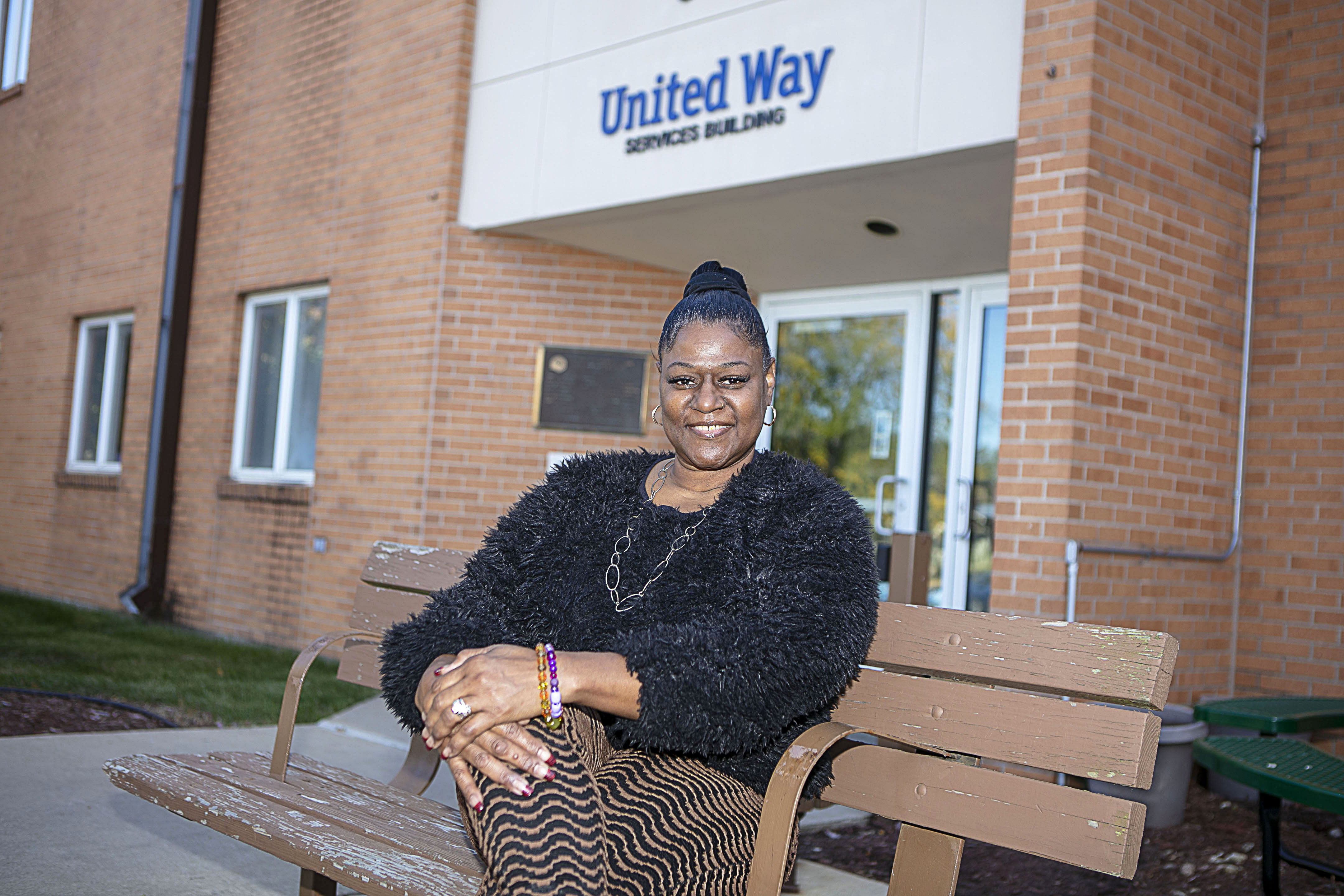
Leonnel has been a community advocate in Rochester for over 30 years, cooking meals for her neighbors and driving them to appointments. In 2019, she became the first homeowner among her siblings. Now, she takes care of two of her grandsons - both of whom have disabilities.
"I'm grateful, because God has been good to me. But the struggles are absolutely there." - Leonnel
Even though she works full-time as a personal care assistant for her grandson, Leonnel tells us she lives paycheck to paycheck. Like 100,000 other families in our area, she is ALICE: Asset Limited, Income Constrained, Employed.
ALICE households struggle to keep gas in the tank and food on the table - but they make too much money to qualify for federal benefits.
Leonnel worked at Mayo Clinic but resigned to care full-time for her grandson. While caring for him, a payroll mistake caused her to miss one month's paycheck. She tried to get food stamps but was told she had to wait weeks to see if she would be approved.
Leonnel was fortunate to have family members who could help her during that time. Otherwise, missing that one paycheck could have had devastating effects.
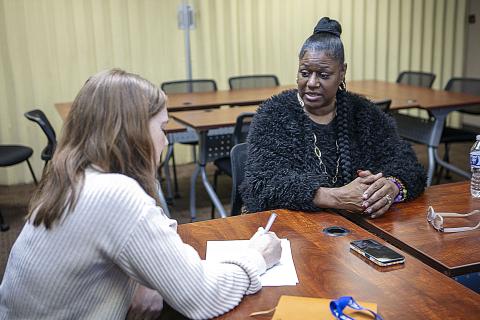 33% of households in Olmsted County experience the same struggles as Leonnel. Yet, community support does make a difference. Leonnel's younger grandson is involved with Rochester's Community Engagement Response Team (CERT), a United Way partner and subsidiary of Barber Shop and Social Services.
That grandson also attends John Marshall High School, a Full-Service Community School. He has received body wash, deodorant, and food from his school's Resource Room for free.
But not everyone has access to these types of community resources, and more is still needed.
"There are other families out there struggling the same exact way. I want to let everyone know that I'm speaking for them." - Leonnel
Through a gift, United Way will continue to strenghen local community supports like CERT and Full-Service Community Schools. Your gift today will make sure community assistance is available when someone needs it most.
When our neighbors move from merely surviving to thriving, our entire community wins.
More About ALICE
ALICE is an acronym that stands for Asset Limited, Income Constrained, and Employed. It represents households that earn above the Federal Poverty Level (FPL) yet struggle to afford basic expenses. The FPL has long been used as the standard for determining both the numer and proportion of people living in poverty in the U.S., and eligibility for most public assistance. Yet, FPL is not adjusted for cost-of-living differences, is not represenative of local communities, nor does it adjust for different ages. With the FPL as the primary way for policymakers and local stakeholders to gauge the extent of financial hardship in their communities, a huge portion of struggling households go unrecognized. That's where ALICE comes in.
ALICE represents the growing number of families who are unable to afford the basics of housing, childcare, food, transportation, health care, and technology. These workers often struggle to keep their own households from financial ruin, while keeping our local communities running. ALICE provides a more accurate measure of exactly how many households are unable to afford the basics through hyper-localized data and metrics.
The ALICE dataset includes:
- Household Survival Budget: The bare-minimum cost of household basics (housing, child care, food, transportation, health care, and a smartphone plan, plus taxes and a small contingency). Calculated at the county level for various household types, including a Senior Survival Budget.
- ALICE Threshold of Financial Survival: The average income that a household needs to afford the basics defined by the Household Survival Budget for each county.
- Below ALICE Threshold: Includes both Federal Poverty Level and ALICE households - all households unable to afford the basics.
- ALICE Essentials Index: A national standardized measure of change over time in the costs of household basics included in the Household Survival Budget.
The Federal Poverty Level (FPL) has long been used as the standard for determining both the numer and proportion of people living in poverty in the U.S., and eligibility for most public assistance. Yet, FPL is not adjusted for cost-of-living differences, is not represenative of local communities, nor does it adjust for different ages. With the FPL as the primary way for policymakers and local stakeholders to gauge the extent of financial hardship in their communities, a huge portion of struggling households go unrecognized.
The FPL in Olmsted County for a family of four is just $20,000, representing approximately 9% of households in our region. The FPL has not been adjusted for nearly 20 years.
The ALICE Household Survival Budget is localized, taking into account cost-of-living, inflation, and the true costs of essentials. The Household Survival Budget in Olmsted County is $89,952 for a family of four (two parents and two children).
According to the FPL, only about 9% of households live in poverty in our region. However, through ALICE, we have found that over 30% of households in our region do not earn enough to afford the basics.
The ALICE report uses a standardized set of measurements to quantify the csots of a basic household budget in each county, and to show how many households are struggling to afford it. The ALICE Methodology incorporates new measures; the Metholody Overview describes these measures in detail. A few of the many measures include:
- U.S. Department of Housing and Urban Development: Fair Market Rents
- U.S. Census Bureau: American Community Survey
- Bureau of Labor Statistics: Consumer Expenditure Surveys
- Minnesota Department of Human Services / Child Care Aware
- U.S. Department of Agriculture
- U.S. Department of Transportation
- Consumer Expenditure Surveys
- U.S. Department of Health and Human Services
- IRS
The ALICE report comes from the highest quality, unbiased data. Each ALICE report contains data on household budgets, demographics, employment opportunities, housing affordability, public and private assistance, and other critical economic factors. ALICE's methodology is reviewed biennially by outside experts and each state report is supported with an indepedent Research Advisory Committee of local data and subject-matter experts.